
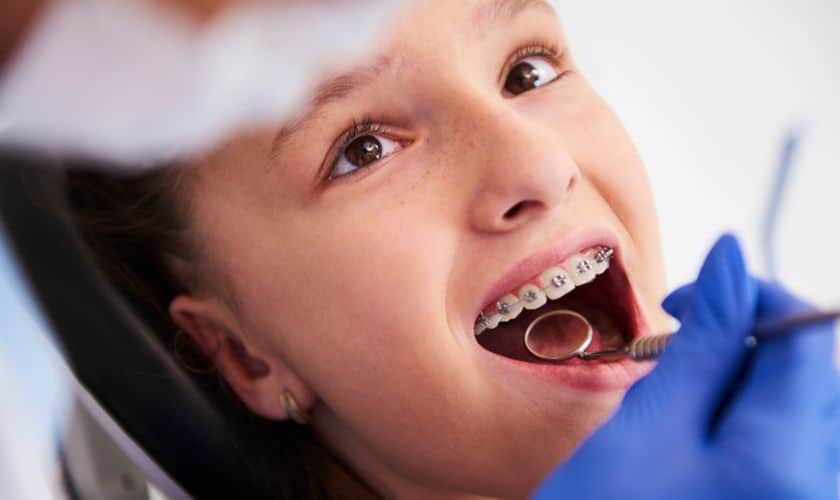
Many parents expect orthodontic treatment to begin during the teenage years, after most permanent teeth have appeared. While that timing works well for many children, some orthodontic concerns are easier to address earlier, while the jaws and facial structures are still developing.
An early orthodontic evaluation does not automatically mean a child needs braces. Instead, it gives us an opportunity to evaluate how the teeth are erupting, how the upper and lower jaws relate to each other, and whether a developing problem could become more difficult to correct later. The American Association of Orthodontists recommends a first orthodontic checkup no later than age 7 because children usually have enough permanent teeth by then to identify developing bite and alignment concerns.
Why Would a Child Need Braces at an Early Age?
Early orthodontic treatment, sometimes called interceptive or Phase 1 treatment, addresses specific problems while a child still has a combination of baby and permanent teeth.
The purpose is not necessarily to straighten every tooth immediately. We may recommend early treatment when correcting a particular issue during growth can create a healthier foundation for permanent teeth and future jaw development.
- Significant crowding
- Crossbites
- Underbites
- Open bites
- Abnormal jaw growth
- Protruding front teeth
- Permanent teeth that are not erupting normally
- Early or delayed loss of baby teeth
- Jaw shifting when biting
- Oral habits that are affecting tooth or jaw position
Why Is Age 7 Important for an Orthodontic Evaluation?
Around age 7, children are usually in what dentists call the mixed-dentition stage. They have both primary and permanent teeth. The first permanent molars and several front teeth have typically erupted, providing important information about bite development.
During an orthodontic evaluation, we can examine how the upper and lower teeth meet and whether enough room appears to be available for additional permanent teeth. We can also look for eruption problems or jaw relationships that parents may not notice at home.
Importantly, an orthodontic checkup at age 7 and starting treatment at age 7 are not the same thing.
6 Reasons Some Children Benefit From Early Orthodontic Treatment
1. A Crossbite May Affect How the Jaws Develop
A crossbite occurs when certain upper teeth sit inside the lower teeth when the child bites down. It can involve the front or back teeth and may sometimes cause the lower jaw to shift to one side.
Because a child’s jaws are still developing, identifying a crossbite early gives the orthodontist an opportunity to determine whether treatment during growth would be beneficial.
2. Severe Crowding Can Limit Space for Permanent Teeth
Baby teeth may appear reasonably straight while permanent teeth are developing beneath the gums. As larger permanent teeth begin erupting, however, there may not be enough room in the dental arches.
During an early orthodontic examination, we assess available space and eruption patterns. If intervention is indicated, treatment may help manage available space and guide permanent teeth as the mouth develops.
3. An Underbite Can Be Related to Jaw Growth
An underbite occurs when the lower front teeth sit ahead of the upper front teeth. Sometimes tooth position contributes to the problem. In other cases, the relationship between the upper and lower jaws is involved.
Because jaw growth plays an important role, timing matters.
4. Protruding Front Teeth May Be More Vulnerable to Injury
Early orthodontic care may sometimes be considered to address severe protrusion and improve the relationship between the front teeth. For active children in San Antonio who participate in sports, protecting the teeth is particularly important.
5. Permanent Teeth May Not Be Erupting as Expected
Permanent teeth do not always follow the expected eruption path. A tooth may lack sufficient space, emerge in an unusual position, or remain trapped beneath the gum or bone.
Early evaluation can help us identify these eruption concerns before they become obvious in the smile.
6. Certain Childhood Habits Can Influence Tooth Position
Possible effects include an open bite, protruding upper teeth, or changes in the shape of the dental arch.
What Are Phase 1 and Phase 2 Orthodontic Treatment?
Parents sometimes hear the terms “Phase 1” and “Phase 2” and assume their child will automatically need two complete rounds of braces. That is not necessarily the case.
Phase 1 treatment takes place while a child still has some baby teeth. It focuses on a specific developmental concern, such as a problematic bite, inadequate space, or jaw relationship.
After Phase 1, there is often a period of observation while additional permanent teeth erupt.
Phase 2 treatment, when required, generally occurs after most permanent teeth have emerged. Its focus is comprehensive tooth alignment and refinement of the bite.
Does Early Treatment Mean Wearing Braces for Longer?
What Happens During a Child’s Orthodontic Evaluation?
- Tooth eruption
- Available space
- Crowding and spacing
- Upper and lower jaw relationships
- Bite alignment
- Facial development
- Oral habits
- Missing or extra teeth
- Teeth developing beneath the gums
What Types of Braces Are Available for Children in San Antonio?
At Bexar Orthodontists and Pediatric Dentists, our orthodontic options include traditional braces, clear braces, and clear aligners. The appropriate choice depends on the patient’s orthodontic needs, age, development, and ability to follow treatment instructions.
Traditional ones use brackets and wires to move teeth gradually. Clear aligners work similarly but use tooth-colored or translucent ceramic materials for a less noticeable appearance. Clear aligners use removable trays and may be appropriate for selected patients.
For younger children who require active orthodontic correction, the recommendation depends primarily on the problem we are trying to address rather than appearance alone.
Signs San Antonio Parents Should Watch for at Home
Consider scheduling an evaluation if you notice your child has difficulty biting or chewing, crowded teeth, prominent front teeth, an underbite, a crossbite, teeth that do not meet properly, unusual spacing, or a jaw that shifts when closing.
Early or late loss of baby teeth can also warrant attention. Persistent thumb or finger habits and permanent teeth appearing in unusual positions are additional reasons to schedule an assessment.
Give Your Child’s Developing Smile the Right Start
The question is not whether every young child should wear braces. Most do not need immediate treatment. The important question is whether a developing orthodontic problem would be easier or more predictable to address while your child is still growing.
At Bexar Orthodontists and Pediatric Dentists, we help families understand what is happening with their child’s teeth and whether treatment is needed now, later, or not at all. When braces are appropriate, our goal is to use them when they support healthy alignment, bite function, and long-term oral health.