Sleeping Apnea & Behavioral Problems in Children
Board-Certified Specialists in Orthodontics and Pediatric Dentistry
located at: 12314 Potranco Rd, San Antonio, TX 78253.
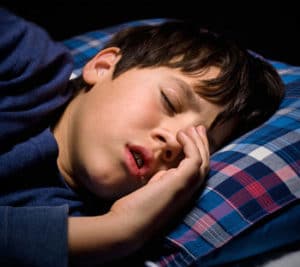
Over the past ten years, there has been a steady rise in the number of youngsters receiving an Attention Deficit Hyperactivity Disorder (ADHD) diagnosis. Yet according to a recent study, many children diagnosed with this condition don’t have it; their behavioral problems are related to sleep-related breathing disorders (SRBD), such as sleep apnea.
A 2012 study published in Pediatrics tracked more than 11,000 children over six years, starting at six months. The findings revealed that kids with SRBD were 40 to 100 percent more likely than others to develop behavior issues similar to ADHD by age 7. That means if your child is showing signs of ADHD — or has already been diagnosed — it’s worth investigating whether sleep disruption could be a factor.
It makes sense because a good night’s sleep plays a key role in how we function, regardless of age. But the way sleep deprivation presents itself varies. Adults tend to be tired and slow-moving when they do not get enough rest. Children often exhibit hyperactive, impulsive, and distracted behaviors. These traits are frequently misinterpreted as ADHD.
So What Exactly Is SRBD?
This condition involves repeated breathing interruptions during sleep. Soft tissues at the back of the throat, such as the tongue or tonsils, can block the airway, making breathing difficult. These tissues create a vibration as air moves past, resulting in snoring. The issue worsens when sleeping on the back, as the lower jaw shifts backward and the tongue slips into the airway.
Children who are overweight potentially have a greater risk of sleep apnea due to extra fatty tissue near the throat, which narrows the airway.
Does your child have a sleep-related breathing disorder? Pay close attention during sleep and take note of any of these warning signs:
- Snoring
- Pauses in breathing
- Chronic mouth breathing
- Constant tossing and turning
- Night panics
- Bed-wetting
How Is Sleep Apnea Treated In Children?
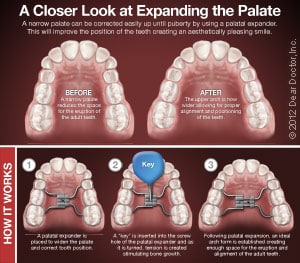
Treatment depends on the cause but can be highly effective. If enlarged tonsils or adenoids are to blame, surgical removal may be recommended. Another option is Continuous Positive Airway Pressure (CPAP) therapy, which involves wearing a mask connected to a machine that delivers a steady stream of air to keep the airway open at night.
When it comes to treating sleep apnea, pediatric dentistry is essential. For younger children who are still growing, a palatal expander is used. This orthodontic appliance slowly widens the roof of the mouth, creating more space. While it is typically used to fix crowding, it can also help improve airflow.
For older kids, Oral Appliance Therapy (OAT) can be helpful. This involves wearing a custom-made device during sleep that repositions the jaw forward, helping to keep the airway open by preventing the tongue from blocking it.
The most important step is finding out what is interrupting your child’s sleep. If you are concerned about sleep apnea, contact our office to schedule a consultation. We will help determine the best course of treatment to ensure your child gets the rest they need.
We proudly accept:
Most PPO Dental and Orthodontic Insurances!