Early Treatment
Board-Certified Specialists in Orthodontics and Pediatric Dentistry
located at: 12314 Potranco Rd, San Antonio, TX 78253.
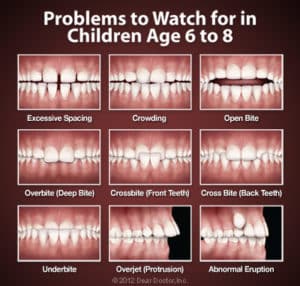
You may have been told it’s never too late to have orthodontic treatment. But when it comes to your child’s teeth, early is often best. The American Association of Orthodontists recommends that children receive their first orthodontic evaluation at age 7. But why is that initial visit—and sometimes initial treatment—so crucial?
Having an orthodontist appointment at a young age has many benefits for kids. Early evaluation, though, does not necessarily equate to starting treatment immediately. In most cases, we observe how your child’s jaws and teeth grow. Then, when the time is right, we begin treatment to achieve the best outcome and prevent greater problems down the road.
Each child grows at their own pace, but most get their first adult molars around age six. We examine these teeth and other signs of development to see how the teeth are growing back to front and side to side. We can even check to see if there is enough space in the mouth for the adult teeth. If not, we can get a head start and nudge it in the right direction.
When Earlier Treatment Is Better
Orthodontic treatment for common issues usually starts between 9 and 14, once the baby teeth are gone and most permanent teeth have come in. However, dental problems are much easier to fix if caught early while your child grows rapidly.
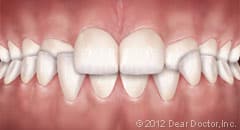 One example is a severe crossbite, where the upper teeth close inside the lower ones. We often use a palatal expander, a gentle device that slowly widens the upper jaw to treat this. It works best before the jaw has fully developed. Fixing the problem could require more complex treatment or even surgery if we wait too long.
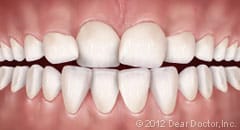 Another issue that’s better addressed early is severe crowding. This happens when the jaw is too small to fit all the adult teeth. In these cases, we might recommend a palatal expander or, in some cases, removing a few baby teeth. This makes room for adult teeth to grow in properly. Even if braces are needed later, early treatment makes the process quicker and easier.
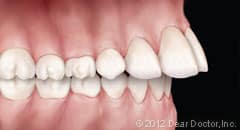 Early care can also help with other concerns. Protruding front teeth can be at higher risk for chips or injury and may affect your child’s confidence. A serious underbite, where the lower jaw sticks out more than the upper jaw, can also lead to bite issues. In both cases, early treatment with braces or headgear can guide jaw growth while your child is still developing. This often helps avoid surgery down the road and improves long-term results.
Correcting Bad Habits
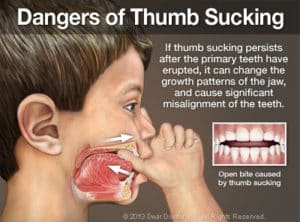 All of us, at some time or other, can form a bad habit. But in some cases, a child’s parafunctional (harmful) habits can influence the development and operation of his mouth, jaws, and teeth. Tongue thrusting, thumb sucking, and mouth breathing are a few of them.
The sucking reflex is healthy in infancy and should resolve spontaneously between 2 and 4 years of age. But if it persists much longer, pressure of the digit on the upper jaw and the front teeth can push the teeth apart and the jaws out of their normal alignment. This can lead to the orthodontic situation of “open bite” and affect speech. There can also be an open bite caused by the pressure of a tongue thrusting forward against teeth.
Mouth breathing — an abnormal breathing pattern in which the mouth is always open, with air entering directly into the lungs — is linked to alterations in the muscular function of the face and tongue. It may cause abnormal growth of the upper and lower jaws and severe orthodontic problems. Though mouth breathing may start as a physical challenge, it can evolve into a habitual behavior that is hard to break.
A few orthodontic treatments can fix these parafunctional habits; the sooner you treat them, the less damage they’ll cause. But these future problems aren’t always apparent. That’s another good reason to bring your child in for an early orthodontic consultation.
We proudly accept:
Most PPO Dental and Orthodontic Insurances!