Overview
Board-Certified Specialists in Orthodontics and Pediatric Dentistry
located at: 12314 Potranco Rd, San Antonio, TX 78253.
Your child’s primary teeth might not last a lifetime, but that doesn’t mean you should ignore those little pearly whites and the importance of caring for them. Your child shouldn’t cradle baby’s teeth like a glass slipper—the sooner you teach good oral hygiene, the easier it will be to keep his or her smile healthy!
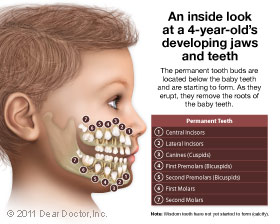 Primary teeth are really important because they help guide the eruption of your permanent (adult) teeth, making sure there’s enough space for them to come in properly. The crowns of permanent teeth softly press against the roots of baby teeth, gradually leading to their natural resorption and disappearance, which is a normal part of dental development. This process makes it easier for the adult teeth to settle into their correct positions smoothly.
Furthermore, your little one’s baby teeth serve an essential function during childhood, aiding in biting, chewing, and even speech. Your child’s baby teeth will be the only ones responsible for these vital functions during the first six years. By around age 12, they’ll have a lovely mix of both primary and permanent teeth. It’s a wonderful idea to help keep their teeth healthy and let them fall out naturally when the time comes, ensuring their smile stays bright and healthy.
Your Child’s First Teeth
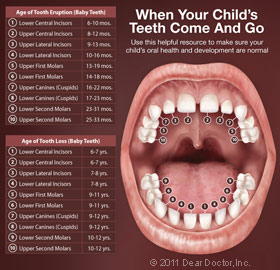 Your baby’s 20 primary teeth will start emerging between 3 and 12 months, with 6-9 months being a usual time frame, but it can happen as early as 3 months or as late as 12 months. Usually, the first teeth to appear are the bottom front ones, then the four upper teeth follow. The first molars follow the canines (the eyeteth). Your baby may have minor teething pain when this happens. If so, please let us know and we’ll tell you what is best to do.
To clean your baby’s gums and the newly emerging teeth, wipe them with a clean, damp gauze pad or washcloth after each feeding. Beginning at age 2, when there are more teeth in the mouth, establish a daily brushing routine with a small, soft-bristled toothbrush and no more than a thin smear of fluoridated toothpaste. Your child might rely on you for this essential task until about 6.
Your Child’s First Dental Appointment
The American Academy of Pediatric Dentistry suggests bringing your child in for their first visit by their first birthday. It may seem early, but this appointment is a wonderful opportunity to learn the best pediatric oral hygiene practices, have cavities checked, and catch any developmental concerns early on.
Different types of tooth decay can affect baby and young children’s teeth. Early Childhood Caries, or tooth decay, can develop quickly, sometimes within only six months, beginning in the enamel and advancing into the softer dentin beneath.
Above all, our goal is to ensure that your child feels happy and comfortable when visiting our office, so they look forward to coming back again and again.
Pediatric Dental Treatments
We provide various pediatric dental treatments to prevent tooth decay in children and repair or save teeth as necessary. These include:
Topical Fluoride — Fluoride applied directly to the surface of the teeth can help strengthen the enamel and reduce the risk of decay. Although toothpastes and small amounts are present in some drinking water sources, we can apply a more concentrated amount directly to your child’s teeth for added protection.
Dental Sealants — We are able to brush on a plastic coating that prevents tooth decay by sealing the small grooves on the chewing surfaces of back teeth, “pits and fissures.” These small cracks provide perfect hiding spots for bacteria that lead to decay. Young tooth enamel tends to be more porous, making it more vulnerable to cavities, but with proper care, you can help protect it and keep your smile healthy. Applying a dental sealant is a quick process that can safeguard teeth for up to a decade.
Root Canal Therapy — To save an injured or severely decayed tooth, you may have had a root canal treatment. Hell, even kids need root canals sometimes. As you read above, baby teeth are crucial for guiding the development of permanent teeth already growing under your child’s gums. Thus, preventing them from early loss can help avoid a “malocclusion” (“mal” – bad; “occlusion” – bite) that requires an orthodontic appliance.
Bonding — Chips and minor breaks to front teeth that are frequent in childhood can often be fixed with tooth-colored bonding materials. These realistic plastic and glass resins are suitable for both baby and permanent teeth, and they last until the child’s facial growth is finished.
 Orthodontic Concerns
 Orthodontic Concerns
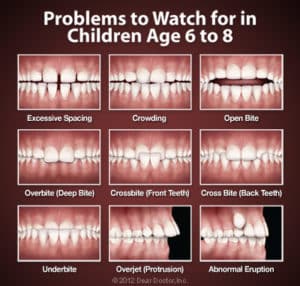
By age 7, most malocclusions are evident. Early interceptive orthodontics can guide tooth and jaw development, reducing later treatment. Many issues can be detected early, highlighting the importance of professional evaluation during growth.
Sports & Your Child’s Teeth
If your child loves playing sports, thinking about a custom-made mouthguard is a wonderful idea. The American Dental Association notes that athletes are 60 times more likely to experience dental injuries if they don’t wear one. We can create a mouthguard tailored specifically to your child’s teeth, providing much better protection than generic options. This is a worthwhile investment that can help prevent pain, discomfort, and costly dental treatments in the future! Feel free to ask us about mouthguards during your child’s next visit.
We proudly accept:
Most PPO Dental and Orthodontic Insurances!